





The complete guide
Buying Guide
Choosing a wrought iron chandelier
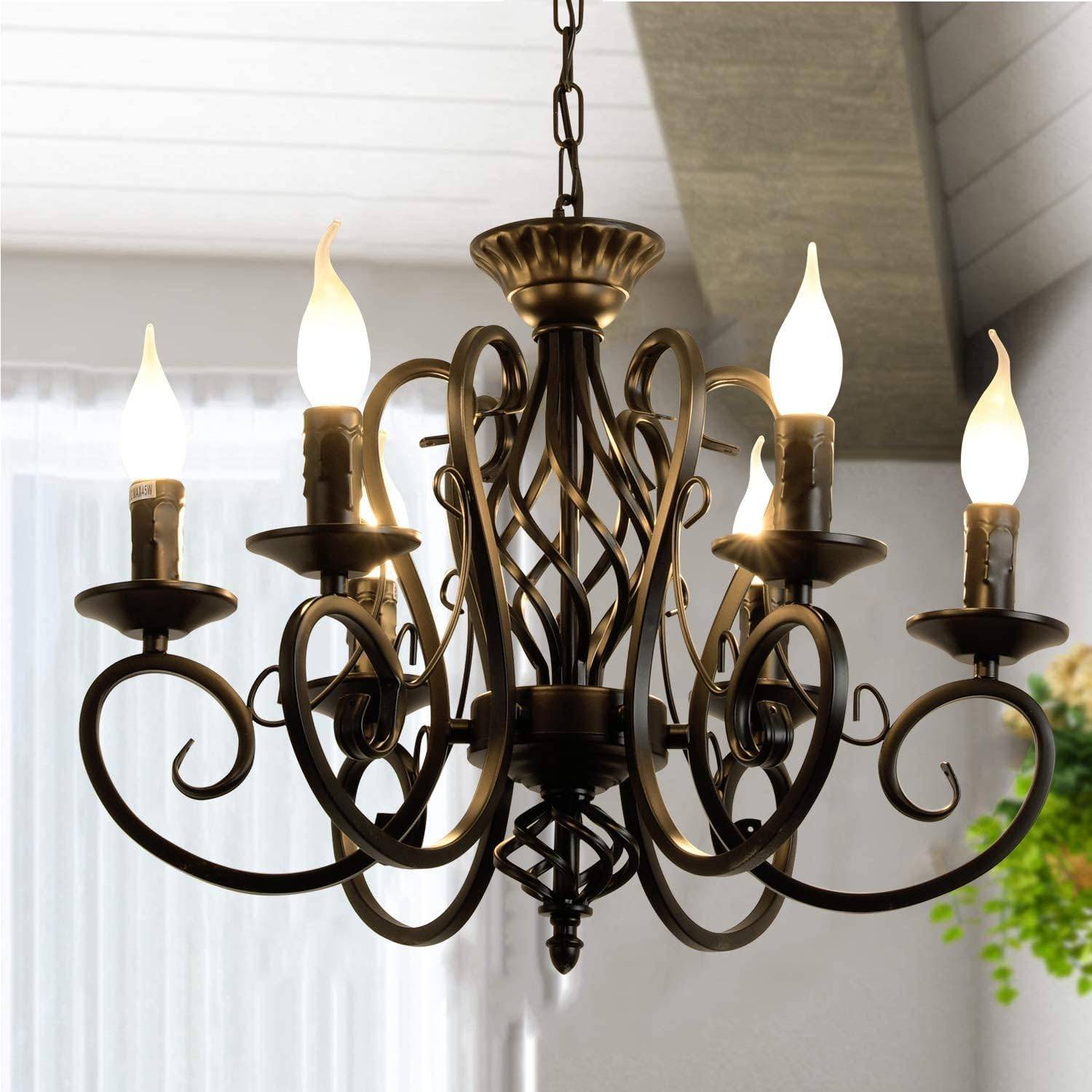
A chandelier does two jobs at once and they pull in different directions. It has to light the room, and it has to look like something worth looking at when it is switched off. Wrought iron designs like this one solve that by being mostly negative space: curved arms, a twisted centre column and six candle stems, so the fitting reads as drawing rather than as mass.
Getting the size right
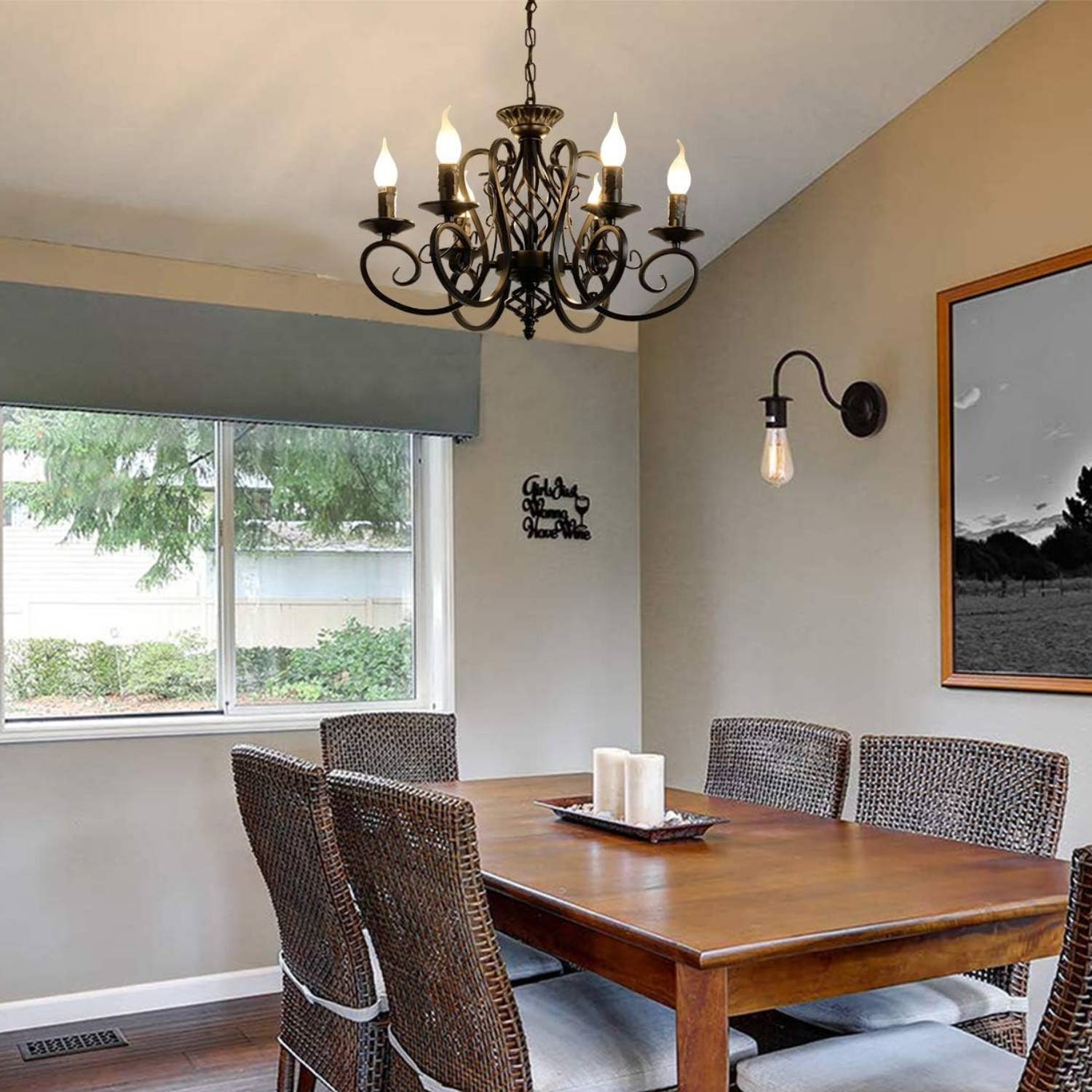
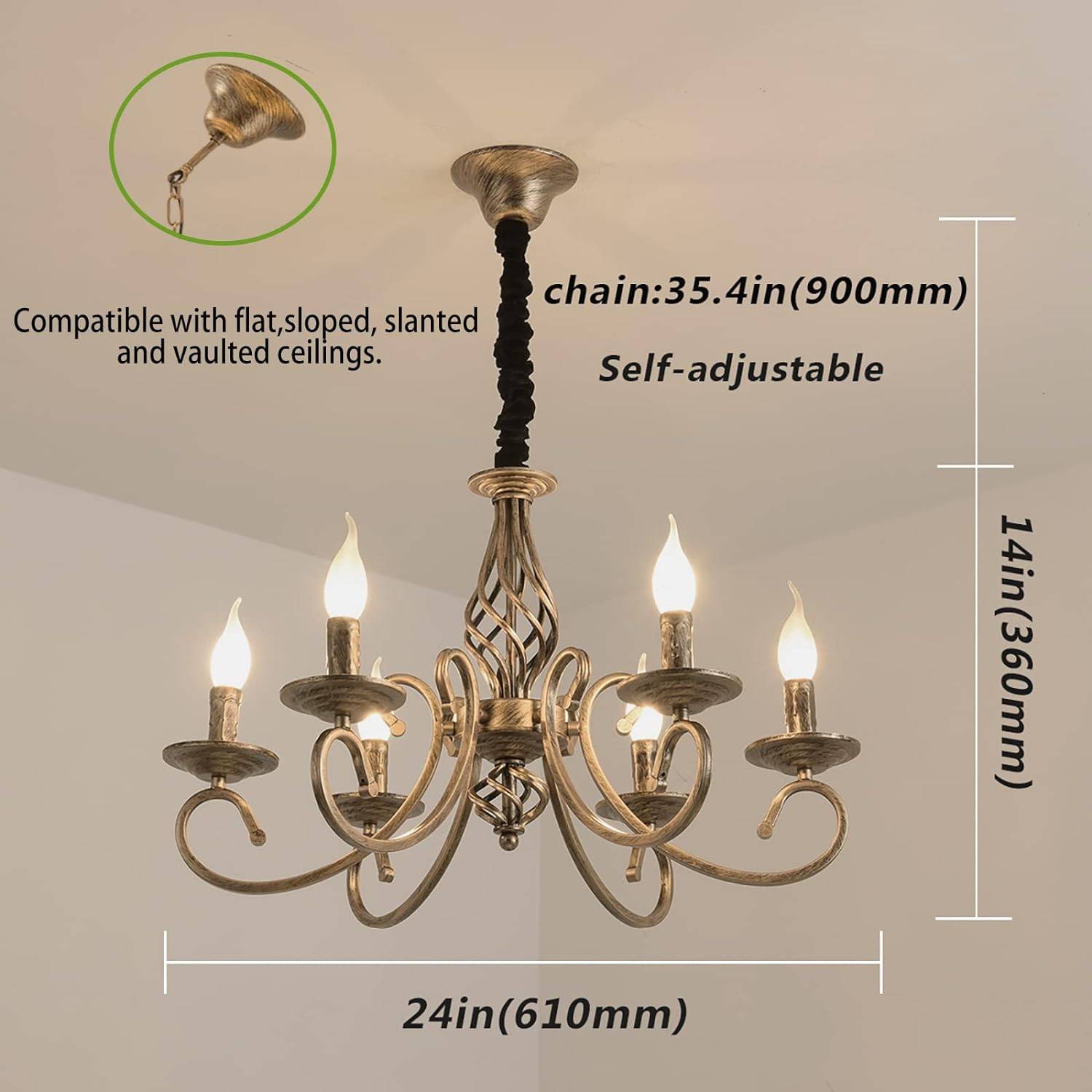
The frame here is 53cm across. As a rough guide for a dining table, a chandelier looks right at roughly half to two thirds of the table width, so 53cm suits a table from about 80cm to 110cm wide. In a hallway or over a stairwell, judge it against the space rather than the furniture, and remember that a fitting seen from below looks smaller than it measures.
Getting the height right
The chain arrives at 90cm and shortens at any link, which covers most ceilings. Over a dining table, hang it so the bottom of the fitting sits 75 to 85cm above the table top. That is low enough to feel like it belongs to the table and high enough that nobody sitting down is looking into a bulb. In an open hallway, keep the bottom of the fitting at least 2.1m off the floor so no one walks into it.
Bulbs change everything
Six E14 bulbs at up to 40W each is a lot of latitude. A clear candle bulb with a visible filament leans vintage and throws sharper shadows through the arms. A frosted candle bulb is softer and kinder in a dining room. Colour temperature matters more than wattage: 2700K reads as candlelight, 4000K reads as an office. If you want to dim it, buy dimmable bulbs and a dimmer switch rated for LED loads, because a standard dimmer and non-dimmable LEDs is the usual reason a new chandelier flickers.
Fitting it
Everything you need to mount it is in the box, and the instructions cover the order of assembly: build the frame, screw up the centre column, set the chain length, wire in, then fit the bulbs last. It is a hardwired mains fitting weighing 3.22 kg, so the ceiling rose has to be sound. If you are not confident with mains wiring, this is a half-hour job for an electrician and worth the call-out.